
Preparing for a New Mexico Protective Order Hearing
A protective order hearing can feel overwhelming, particularly when safety concerns, stress, and uncertainty are already present. Preparation cannot remove the emotional weight of the process, but it can help each person understand what the court may need to consider. Whether you are a petitioner seeking protection or a respondent responding to allegations, careful, respectful preparation matters.
This general information is not legal advice and cannot predict an outcome. At Ternoir Law P.C., we encourage people facing family-law concerns in Las Cruces and throughout New Mexico to seek individualized guidance as early as possible, while prioritizing personal safety and privacy.
Understand the Hearing, Allegations, and Deadlines
Begin by carefully reading every document you receive from the court. The petition, temporary order, notice of hearing, and any other paperwork may identify the allegations, hearing date, location, restrictions, and deadlines that apply. Do not assume that a hearing date has changed or that an order no longer applies unless the court has clearly said so.
Petitioners should be prepared to explain the events underlying their request in a focused, factual way. Respondents should review what has been alleged and understand the need to appear, respond appropriately, and follow every current court directive. The purpose of preparation is not to minimize safety concerns or encourage unnecessary contact. It is to support a more orderly, informed process.
Create a Clear, Fact-Based Timeline
Trauma can affect memory, and court preparation can bring difficult events back to the surface. A written timeline may make it easier to organize information without requiring anyone to rely solely on memory in a stressful moment.
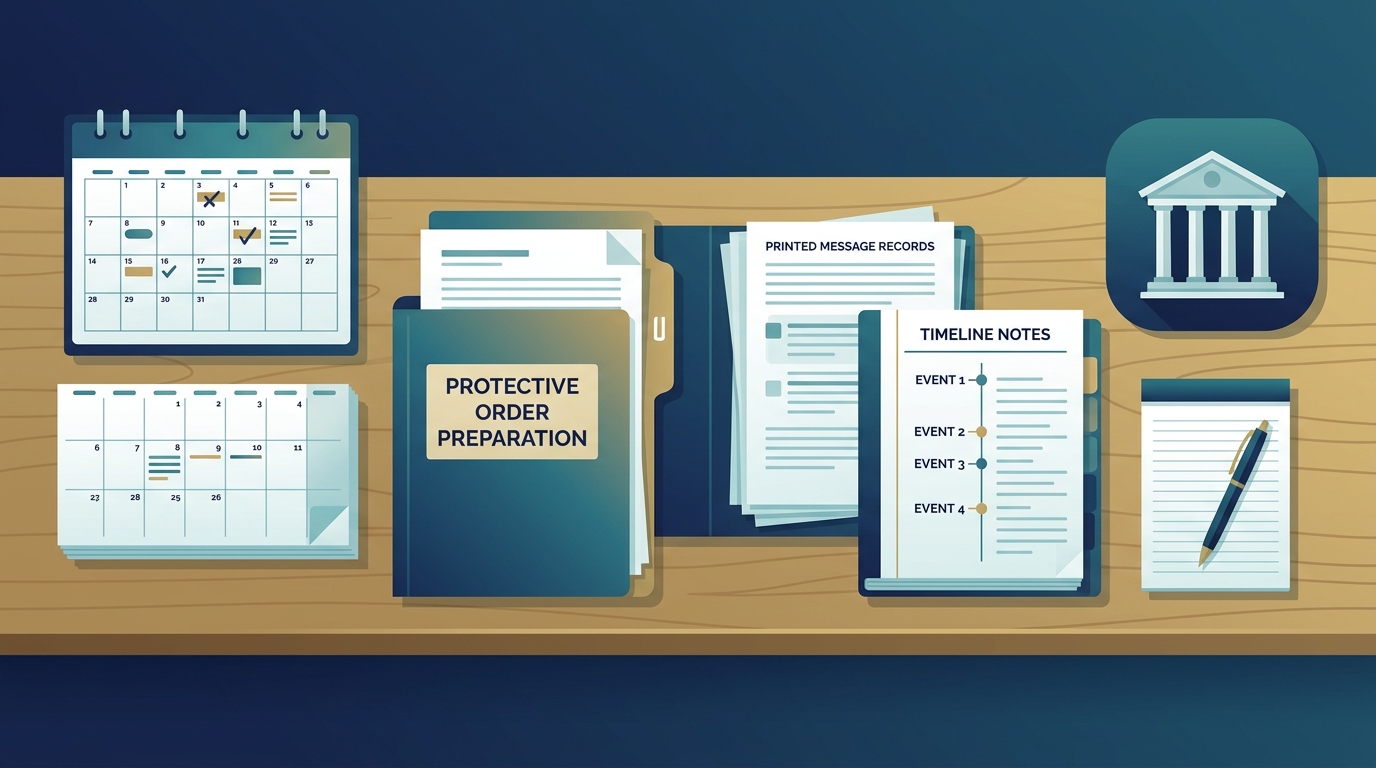
Start with dates or approximate dates, locations, people present, and a concise description of what occurred. Include relevant events leading up to the petition, incidents described in the paperwork, contacts after a temporary order was issued, and any related reports or medical care. If you do not know an exact date, say so rather than guessing. A clear timeline should distinguish firsthand knowledge from information learned from someone else.
Keep the timeline factual and readable. It may be helpful to place supporting materials beside the relevant entry, such as a message, photograph, call log, or report. Our New Mexico law firm often finds that organized records help clients and counsel identify questions that need careful attention before a hearing.
Preserve Messages, Photographs, and Other Records
Digital evidence can be important, but it should be preserved thoughtfully. Save original text messages, emails, voicemails, social-media messages, photographs, and videos where possible. Capture screenshots that show dates, times, names or account information, and the full conversation context. Avoid editing screenshots, cropping out relevant information, or altering photographs.
Consider keeping copies in a secure location that is not easily accessible to another person, such as a protected cloud account, an external storage device, or with a trusted person when appropriate. If privacy or device monitoring is a concern, use a safe device and account whenever possible. Do not access another person’s accounts, devices, or private information without authorization.
Written records from law enforcement, medical providers, schools, workplaces, or service providers may also be relevant in some situations. We recommend discussing the appropriate use of these materials with a New Mexico attorney rather than assuming every document should be filed or shared.
Identify Witnesses With Relevant Knowledge
A witness may have directly observed an incident, heard relevant statements, seen injuries or property damage, or have other firsthand knowledge connected to the allegations. Make a list of each potential witness, what they personally know, and how to contact them. It is generally more helpful to identify specific firsthand observations than broad opinions about either party.
Do not pressure anyone to take a side, change their recollection, or repeat a particular version of events. If a witness is willing to participate, an attorney can help explain practical questions about whether their testimony or a document may be useful and what court procedures may apply.
Follow Temporary Orders Exactly
A temporary protective order can include restrictions involving contact, locations, shared residences, children, firearms, or other matters. The exact terms depend on the order and circumstances. Both parties should read the order closely and comply with it exactly until it changes, expires, or the court provides different direction.
Do not treat indirect contact through friends, relatives, social media, new phone numbers, or workplace communications as harmless. If an order restricts contact, attempts to explain, apologize, negotiate, or seek reconciliation can create serious complications and may increase safety risks. Questions about child exchanges, belongings, housing, or necessary communications should be addressed through lawful, appropriate channels and with legal guidance when possible.
Plan for Safety at the Courthouse
Preparing for a hearing should include a practical courthouse safety plan. If you are concerned about encountering the other party, contact the court ahead of time to ask about available procedures, arrival options, waiting areas, security, or accessibility accommodations. Do not rely on a private arrangement with the other party to manage contact at the courthouse.
Arrange transportation and support in advance if that would help you feel safer. A trusted support person may be able to accompany you to the courthouse, subject to court rules. Arriving early, knowing where to park, bringing required identification and paperwork, and having a plan for leaving afterward can reduce avoidable stress.
If there is an immediate threat to anyone’s safety, contact emergency services. Court preparation should never take priority over urgent safety needs.
Keep Communications Appropriate and Private
Protective-order matters can create a strong urge to respond publicly or directly. It is usually wiser to avoid arguing about the case by text, email, social media, or through mutual acquaintances. Keep any permitted communications brief, respectful, and limited to necessary subjects. Preserve relevant communications rather than deleting them.
Privacy deserves particular care. Avoid posting documents, allegations, photographs, or personal details online. Before sending sensitive material to anyone, confirm that the communication method is secure and appropriate. Ternoir Law P.C. emphasizes privacy-focused communication because clients should be able to discuss difficult circumstances with care and confidentiality.
Seek Individual Legal Advice Early
A protective order hearing can affect safety, housing, parenting arrangements, employment, access to property, and other important parts of life. The process may feel especially confusing when there are overlapping family-law or criminal-law concerns. A family law attorney in New Mexico can review the documents, explain the hearing process, help organize relevant information, and discuss options based on the facts of the situation.
Ternoir Law P.C. provides client-centered, confidential legal services across New Mexico, from Alamogordo to Albuquerque and from Farmington to Santa Fe. We understand that clients may need a clear communication plan, privacy-conscious technology, and practical support while navigating a stressful legal matter.
FAQ
What should I bring to a protective order hearing?
Bring the court papers you received, a government-issued photo ID if available, your organized timeline, and copies of relevant materials such as messages, photographs, reports, or witness information. Check the court’s instructions and speak with an attorney about what may be appropriate to bring or present.
Can I contact the other party to resolve the situation before court?
If a temporary order restricts communication, follow it exactly. Even when communication is not expressly prohibited, direct contact can create safety concerns or misunderstandings. Legal advice can help you identify appropriate options for necessary issues.
What if I cannot attend the hearing?
Do not simply miss the hearing. Contact the court promptly to learn about its procedures and consider speaking with counsel as soon as possible. Missing a hearing can have significant consequences, and the available options depend on the circumstances and court rules.
Can a friend or family member come with me?
A support person may be helpful, but courthouse and courtroom rules can limit who may enter a hearing or remain in the courtroom. Contact the court in advance if you have questions about support, safety, or accommodations.
How can I communicate privately with a lawyer?
Use a device and account that you believe are secure. Let the law office know if voicemail, email, text messages, shared addresses, or certain times of contact are not safe. We can discuss communication preferences designed to respect your privacy.
If you are preparing for a New Mexico protective order hearing and would like confidential, respectful legal guidance, contact Ternoir Law P.C. at (575) 966-9999. We will listen carefully, explain the next steps we can discuss, and work to communicate in a manner that respects your safety and privacy.