Preserving Evidence After a New Mexico Car Accident
After a New Mexico car crash, preserving evidence promptly can help create a clearer record of what happened, the injuries involved, and the financial impact of the collision. If you are able to do so safely, document the scene, seek timely medical attention, keep records organized, and be cautious about what you say to insurers. At Ternoir Law P.C., we encourage injured people to protect their privacy and retain information before details, physical evidence, and memories become harder to verify.
Start With Safety and Prompt Medical Care
Your first priority after a collision is safety. Move to a safe location when possible, call 911 if anyone may be injured, and follow instructions from emergency personnel. Do not remain in traffic or place yourself at risk to take photographs or collect information.
Prompt medical care is important even when pain seems manageable at the scene. Some crash-related injuries may not be immediately apparent, and a medical evaluation can identify concerns that need treatment. Medical records may also document reported symptoms, examination findings, recommended care, and the connection in time between the crash and your condition.
Follow the treatment plan provided by your medical professionals, attend recommended appointments, and keep copies of discharge instructions, referrals, prescriptions, and work restrictions. This article provides general educational information and is not individualized legal or medical advice.
Photograph the Scene Before Conditions Change
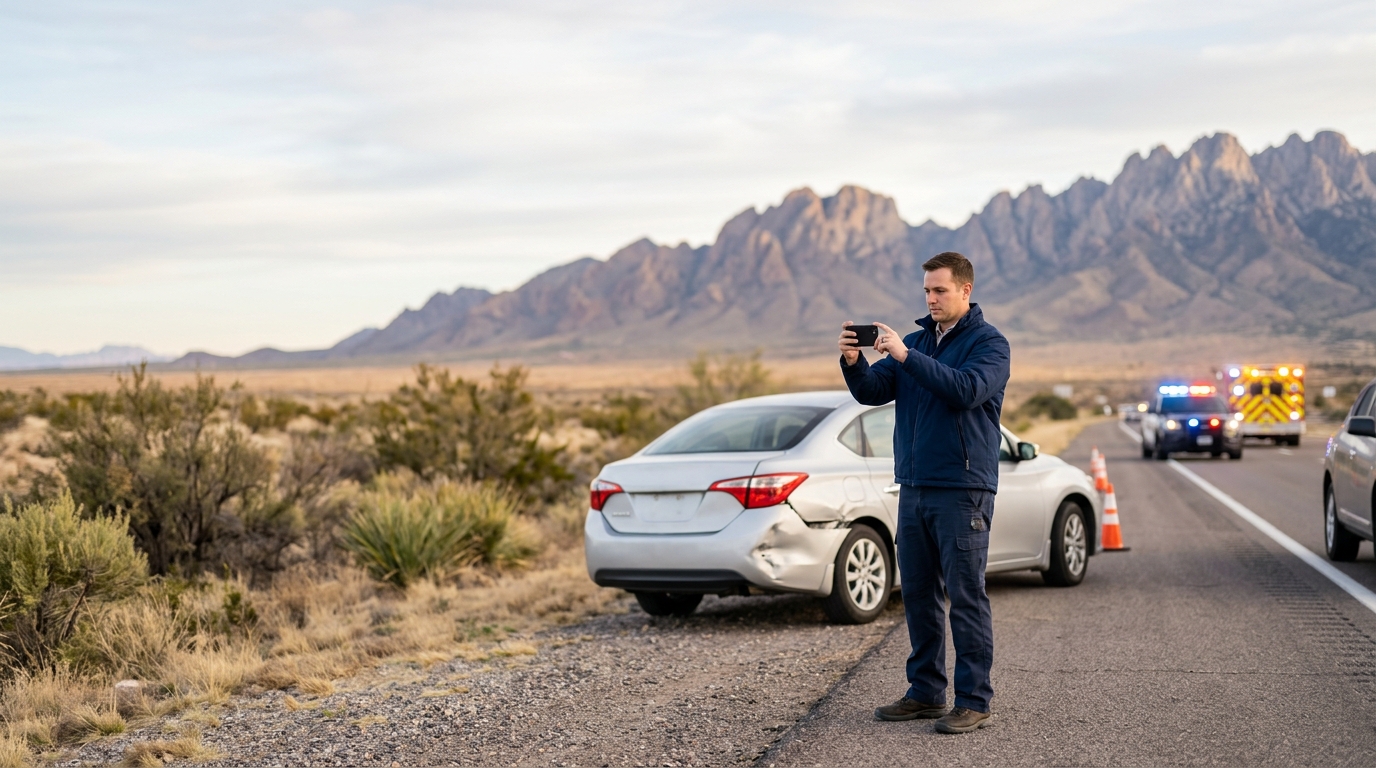
When it is safe to do so, take photographs and short videos from several distances and angles. Wide images can show the overall location and positioning of the vehicles, while closer images can preserve vehicle damage, debris, roadway conditions, and relevant traffic controls.
Useful scene photographs may include:
- All vehicles involved, including license plates and points of impact
- Damage to the exterior and interior of your vehicle
- Skid marks, debris, fluid trails, broken glass, and damaged property
- Traffic signals, stop signs, lane markings, construction zones, and visibility conditions
- Road surface conditions, weather, lighting, and obstructions
- Visible injuries, when appropriate and respectful of privacy
Do not edit the original files. Store them in more than one secure location, such as a backed-up phone folder or encrypted cloud account. Preserve the original date and time data whenever possible.
Document Vehicle Damage and Physical Items
Vehicle damage can be repaired, moved, or disposed of quickly. Take detailed images before repairs begin, and keep repair estimates, invoices, towing records, storage receipts, and photographs from the repair facility. If the vehicle is declared a total loss, retain valuation documents, insurer correspondence, and any records related to its condition before the crash.
Keep other physical items that may be relevant, such as damaged clothing, personal property from the vehicle, a child safety seat, or other crash-related items. Do not discard anything simply because it appears minor. If you are uncertain whether an item matters, preserve it until you have had an opportunity to obtain legal guidance.
Obtain Witness and Police Report Information
Independent witnesses can provide important context about how a collision occurred. If possible, collect each witness’s name, phone number, email address, and a brief description of what they observed. Avoid pressuring anyone to take a position or argue about fault at the scene. A simple request for contact information is usually sufficient.
Ask the responding officer how to obtain the crash report and record the report number, agency name, officer name, and badge number if available. Once you receive the report, review it carefully for factual inaccuracies, including vehicle information, insurance details, location, date, time, and listed parties. A police report can be an important record, but it may not contain every fact or resolve every issue.
Also make a personal written account as soon as you can. Note where you were traveling, what you saw and heard, road and traffic conditions, the sequence of events, symptoms you experienced, and names of people who spoke with you. Date the entry and preserve it privately.
Keep Medical Records and Injury-Related Documentation
Medical documentation may include emergency department records, urgent care notes, primary care visits, imaging reports, therapy records, specialist evaluations, medication lists, and invoices. Keep documents from every provider involved in your care, rather than relying on memory or assuming the records will remain easily available later.
It can also be helpful to maintain a private symptom journal. Record pain levels, mobility limitations, sleep disruption, missed activities, treatment appointments, and changes in daily functioning. Write factually and consistently. This is not a substitute for medical care, but it can help you remember the day-to-day effects of an injury.
Track Expenses, Lost Income, and Other Financial Effects
Create a dedicated folder for crash-related expenses. Save receipts and statements for medical bills, prescriptions, transportation to appointments, vehicle towing, repairs, rental transportation, and other out-of-pocket costs. If you miss work or cannot perform usual job duties, preserve pay stubs, attendance records, employer communications, tax documents, and written confirmation of missed time when available.
Organized financial records can make it easier to understand the practical impact of a collision. Keep originals when possible and make digital copies. Avoid altering documents, estimates, or receipts.
Communicate Carefully With Insurance Companies
Report the crash to the appropriate insurer within the time required by your policy, but communicate carefully. Provide accurate basic information without speculating about fault, the extent of injuries, or facts you do not yet know. Do not guess about speed, distance, medical prognosis, or what another driver may have intended.
Keep a log of every insurance communication, including the date, time, representative’s name, claim number, phone number, and a brief summary of the discussion. Save letters, emails, text messages, claim portal screenshots, recorded-message notices, settlement offers, and requests for documents.
Before signing a broad medical authorization, providing a recorded statement, posting crash details on social media, or accepting a settlement, consider speaking with a New Mexico personal injury attorney. Seemingly routine communications can have lasting consequences, and confidential legal guidance can help you understand the purpose of a request before responding.
Protect Confidential Information and Digital Evidence
Modern vehicles and phones may contain useful information, including call logs, location data, vehicle alerts, dash camera footage, and photographs. Preserve relevant digital materials without publishing them unnecessarily. Avoid posting images, opinions, medical updates, or discussions of the crash on social media. Privacy is especially important while facts are still being reviewed.
At Ternoir Law P.C., our client-centered approach includes careful communication and privacy-focused technology. We encourage clients to share sensitive documents through appropriate channels rather than sending records broadly by text, social media, or unsecured platforms.
When to Speak With a New Mexico Personal Injury Attorney
A collision may involve questions about insurance coverage, injuries, property damage, lost income, or responsibility. Speaking with a personal injury attorney in New Mexico early can help you understand what records to preserve, which deadlines may apply, and how to communicate thoughtfully while protecting confidential information. Legal representation does not guarantee a particular outcome, but timely guidance may help you make informed decisions.
Ternoir Law P.C. provides statewide New Mexico legal services, serving clients from Alamogordo to Albuquerque, Carlsbad to Chaparral, and Farmington to Santa Fe. Whether your crash occurred near Las Cruces or elsewhere in the state, we can discuss your circumstances and the information you have preserved.
FAQ
Should I take photos if the police are already coming?
Yes, if it is safe. Officers may document portions of the scene, but your own photographs can preserve vehicle positions, damage, roadway conditions, and other details that may change before or after law enforcement arrives.
What if I did not feel injured until after leaving the scene?
Seek medical attention promptly and explain that you were involved in a crash. Keep records of your symptoms, medical visits, recommendations, and expenses. Delaying care can create health concerns and may make it more difficult to establish a clear record of your condition.
Do I have to give the other driver’s insurer a recorded statement?
Insurance requirements can depend on the policy and circumstances. Before giving a recorded statement to another driver’s insurer, consider consulting a New Mexico car accident lawyer about the request and your options. This is general information, not individualized legal advice.
How long should I keep crash-related records?
Keep all records until the matter is fully resolved and you have received legal guidance about retention. This includes original photographs, reports, medical records, receipts, correspondence, and digital files. It is generally safer to preserve records longer than to discard them too soon.
Can Ternoir Law P.C. help if my crash happened outside Las Cruces?
Yes. Ternoir Law P.C. serves clients throughout New Mexico. Contact our team to schedule a confidential consultation and discuss the circumstances of your crash, the evidence available, and the next steps that may be appropriate for your situation.
To speak with Ternoir Law P.C., call (575) 966-9999 to request a confidential consultation. We are available to discuss your New Mexico car crash concerns and help you evaluate the information you should preserve.